
 1 year ago
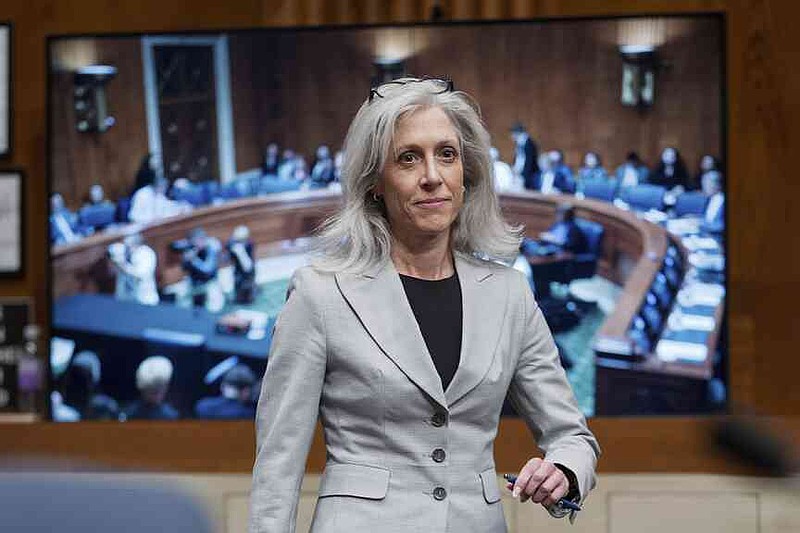
NEW YORK -- The nation's top public health agency was left reeling Thursday as the White House worked to expel the Centers for Disease Control and Prevention director and replace her with a top adviser to Health Secretary Robert F. Kennedy Jr.
The turmoil triggered rare bipartisan alarm as Kennedy tries to advance anti-vaccine policies that are contradicted by decades of scientific research.
Two administration officials said Jim O'Neill, a former investment executive, would supplant Susan Monarez, a longtime government scientist. O'Neill worked at the Department of Health and Human Services under President George W. Bush, but does not have a medical background. The officials requested anonymity to discuss personnel decisions before a public announcement.
A flash point is expected in the coming weeks as a key advisory committee, which Kennedy has reshaped with vaccine skeptics, is expected to issue new recommendations on immunizations. The panel is scheduled to review standard childhood shots for measles, hepatitis and other diseases.
Two Republican senators called for congressional oversight and some Democrats said Kennedy should be fired. He is scheduled to testify on Capitol Hill on Sept. 4.
Kennedy has not explained the decision to oust Monarez less than a month after she was sworn in, but he warned that more turnover could be coming.
"There's a lot of trouble at the CDC and it's going to require getting rid of some people over the long term, in order for us to change the institutional culture," Kennedy said at a news conference in Texas.
The White House has only said that Monarez was "not aligned with" President Donald Trump's agenda.
Monarez's lawyers said she refused "to rubber-stamp unscientific, reckless directives and fire dedicated health experts." She is fighting her dismissal, saying the decision must come directly from Trump, who nominated her in March. The president has not said anything publicly about the matter.
TENSIONS FLARE
The contention surfaced Wednesday night with the administration's announcement that Monarez would no longer lead the CDC. In response, three officials -- Dr. Debra Houry, Dr. Demetre Daskalakis and Dr. Daniel Jernigan -- resigned from senior roles at the agency.
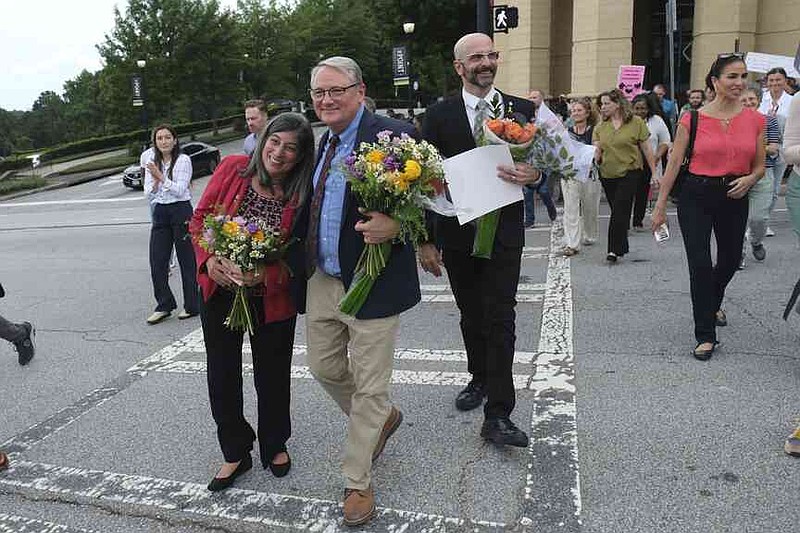
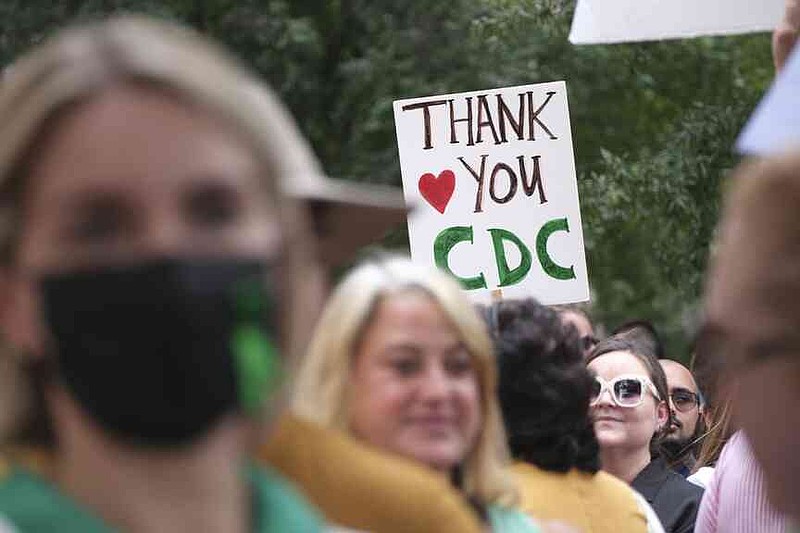
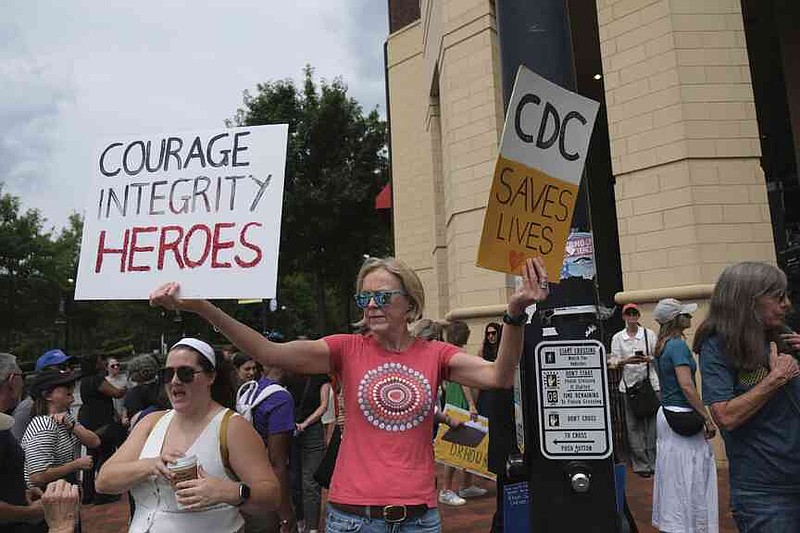
The officials returned to the office Thursday to collect their belongings, and hundreds of supporters gathered to applaud them as they left the Atlanta campus. There were bouquets of flowers, cheers and chants of "USA not RFK."
Daskalakis, who resigned as head of the National Center for Immunization and Respiratory Diseases, said, "I fear that children will be hurt by poor decision making around vaccines.
"You cannot dismantle public health and expect it to still work," he said.
Jernigan stepped down as director of the National Center for Emerging and Zoonotic Infectious Diseases and Houry quit her post as the agency's deputy director and chief medical officer.
Houry told The Associated Press that Monarez had tried to guard against political meddling in scientific research and health recommendations.
"We were going to see if she was able to weather the storm. And when she was not, we were done," Houry said.
Dr. Richard Besser, a former CDC acting director, said Monarez told him that she had refused orders to fire her management team. He also said she refused to automatically sign off on any recommendations from Kennedy's handpicked vaccine advisers.
"Dr. Monarez was one of the last lines of defense against this administration's dangerous agenda," said Besser, now president of the Robert Wood Johnson Foundation, which helps support The Associated Press Health and Science Department.
Monarez was tapped next to lead the $9.2 billion agency while serving as its interim director. However, questions immediately emerged within Kennedy's circle about her loyalty to the "Make America Healthy Again" movement, especially given her previous support of the covid-19 vaccines that Kennedy has routinely criticized.
ADVISORY PANEL WORRIES
One issue has been Kennedy's handling of the CDC's Advisory Committee on Immunization Practices, a group of outside experts who make recommendations to the CDC director on how to use vaccines. The recommendations are then adopted by doctors, school systems, health insurers and others.
The panel is expected to meet next month, and Sen. Bill Cassidy, R-La., said any recommendations issued then will be "lacking legitimacy."
"Serious allegations have been made about the meeting agenda, membership, and lack of scientific process being followed," said Cassidy, who heads the Senate committee overseeing Kennedy's department. He added that "these decisions directly impact children's health and the meeting should not occur until significant oversight has been conducted."
Cassidy, a doctor, provided crucial support for Kennedy's nomination after saying Kennedy had assured him that he would not topple the nation's childhood vaccination program.
And yet, according to a government notice, the committee on Sept. 18 will take up votes on vaccines that have been settled fixtures for children, including shots to protect against hepatitis B and a combination shot against measles, mumps, rubella and chickenpox.
Kennedy is a longtime leader in the anti-vaccine movement, and in June, he abruptly dismissed the entire panel, accusing members of being too closely aligned with manufacturers. He replaced them with a group that included several vaccine skeptics and then he shut the door to several doctors organizations that had long helped form vaccine recommendations.
Houry and Daskalakis said Monarez had tried to make sure scientific safeguards were in place.
For example, she tried to replace the official who coordinated the panel's meetings with someone who had more policy experience. Monarez also pushed to have slides and evidence reviews posted weeks before the committee's meetings and have the sessions open to public comment, Houry said.
HHS officials nixed that and called Monarez to a meeting in Washington on Monday, Houry said.
Information for this article was contributed by Kenya Hunter, Ron Harris, Michelle Price and Michelle R. Smith of The Associated Press.


 English (US) ·
  Indonesian (ID) ·